Innovation Under Construction: The Riga Makerspace Story
Thursday 27 March 2025
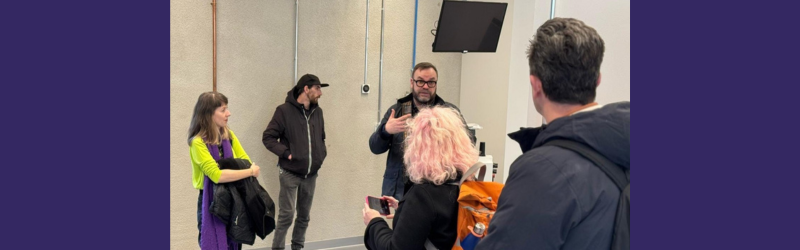
Photo: Jānis Gailītis giving a tour to participants at Makerspace, Riga, 2025
ELIA Head of Programmes, Barbara Revelli revisits Riga, ten years on, as the 'Makerspace' building project she was involved with in Latvia nears completion. Read why spaces like these play such an important role. Ten years ago, I visited Riga, Latvia, as part of an EU-funded project I was leading on behalf of ELIA. The project, Making a Living from the Arts, aimed to support the career development of emerging artists and nurture entrepreneurial skills within arts education. It was one of the first large-scale Creative Europe partnership initiatives.
The project brought together international experts—Kai Lehikoinen (UNIARTS, Helsinki), Georg Russegger (then at the Fine Arts Academy of Vienna), and Nadia Danhash (Royal College of Art), to name a few—who collaborated with students, teachers, makers, and academics to expand our understanding of entrepreneurship. Artists from diverse disciplines across the world, showcased their work at an international festival in Amsterdam called NEUNOW, which was part of this project. During the festival, we hosted workshops on various topics, ranging from pricing artwork and intellectual property rights to socially engaged art and more conventional career paths for artists.
Back then our team engaged in conversations with a wide community of artists, students, educators, and creative industry professionals to explore new possibilities for emerging creatives. These discussions took place in Amsterdam and other locations, including Riga.
As part of Making a Living from the Arts, we supported colleagues at the Art Academy of Latvia in conceptualising their own makerspace and refining their business strategy. In the years that followed Jānis Gailītis from the Art Academy of Latvia visited established makerspaces across Europe gathering insights and best practices and the building renovations began.
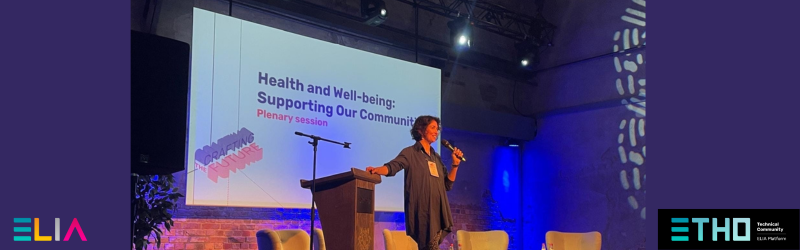
Barbara Revelli at ETHO 2025
The Makerspace initiative will not only serve students of the Art Academy of Latvia; it will also benefit the Latvian Academy of Culture and a nearby secondary school. This collaborative environment will enable institutions to share knowledge and enhance practical learning opportunities. Latvia faced a population decline—with many young creatives and educators seeking opportunities abroad and the completion of this space comes as a source of pride. It ignites hope and demonstrates that European projects can yield tangible, long-lasting results.
Workshops in areas such as laser cutting, 3D printing, ceramics, metalworking, woodworking, and fashion offer incredible opportunities for creativity and innovation. To truly unlock the potential of these spaces, having correctly skilled staff is essential. With experienced workshop masters guiding students, the Makerspace can thrive, ensuring both efficiency and safety while inspiring the next generation of makers to explore, create, and bring their ideas to life.
Coincidentally, my return to Riga this time was prompted by a gathering with ELIA’s ETHO community of technical staff, technicians, and workshop masters. We discussed how these highly skilled professionals are often undervalued. Kelly Vere from the University of Nottingham, shared an inspiring example highlighting the need for a more positive culture around technical skills and careers.
The European Commission recently launched its new Union of Skills, emphasising the importance of technical expertise for Europe’s future. With structured investment and recognition of technical staff as integral to success, Riga’s Makerspace could become a magnet for talent—even attracting professionals who previously left Latvia in search of better opportunities. The space holds immense potential to shape future generations of artists, designers, and creative entrepreneurs. By investing in the skills that will define tomorrow, this is possible!
This is a moment for celebration—a testament that EU investments can leave a lasting legacy in arts education. With the right support, this remarkable space has the potential to be the thriving creative hub it was always meant to be. By nurturing its growth, we can transform it from a space into a vibrant center of innovation and inspiration, shaping the future of creativity! Barbara Revelli
|

 Email to a Friend